

Quick Fixes For Squeaky Stairs Without Replacement
Got squeaky stairs? No problem, we’ve got solutions!
Noisy stairs happen when hardwood starts to age. In most cases, squeaks are not serious and can be quickly fixed using any of the methods we’ll discuss below. However, there are sounds you should watch out for, as they can indicate that your stairs will need a full replacement.
So if you’ve noticed your hardwood floor may be in need of repair because it’s getting noisier underfoot, read on to learn the common reasons for squeaks, their fixes, and which sounds to watch out for.
Why Stairs Creak

There are a few reasons your stairs are squeaking, including hardwood aging and installation errors. These are the most common reasons your stairs start squeaking.
- Lumber Shrinking: As lumber ages, it dries out and shrinks. When it does this, it creates gaps that trigger friction, and it’s that friction that squeaks.
- Loose Nails/Fasteners: Another problem with aging stairs is that nails and fasteners loosen from the wood, which can rub and produce a very high-pitched noise.
- Loose Stringers: Humidity or age can compromise the integrity of your stringers, leading to squeaks.
- Gaps: If there are gaps between the stringer and tread or the stringer and riser, then it will generate noise. Typically, gaps occur with age, humidity, or temperature variation.
- Installation Errors: If the staircase is installed with improper material, isn’t up to code, or installers use the wrong fixtures, like nails, it will lead to squeaks.
How To Fix Squeaky Stairs
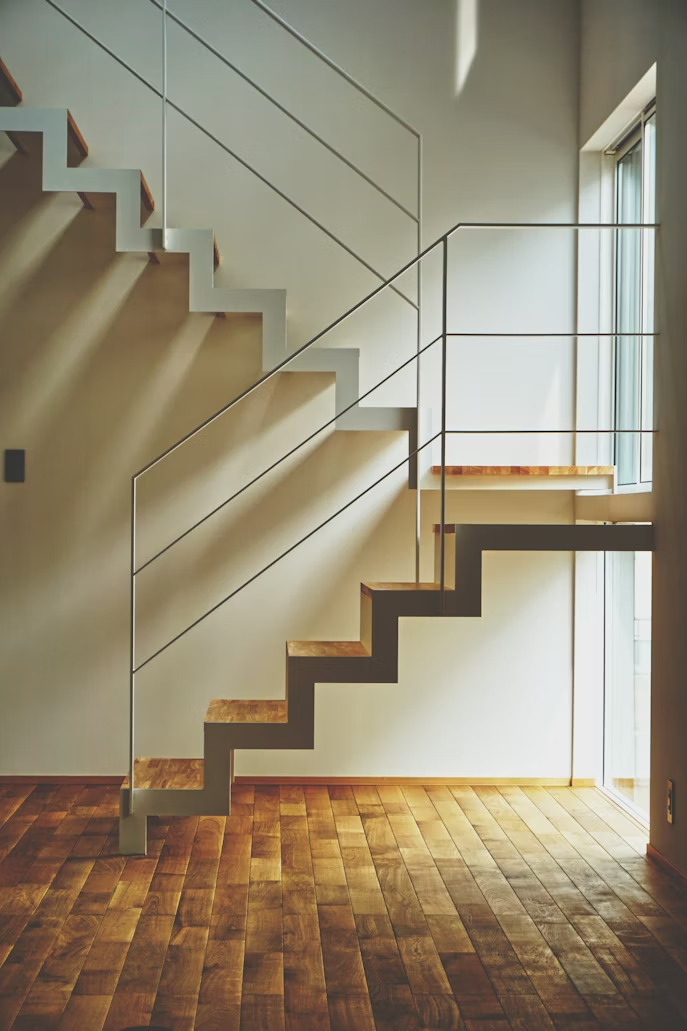
Before we get into how to fix these sounds, let’s go over that stairs are comprised of 3 main parts: the stringer, or zig-zag piece, which connects the riser (vertical part of the stringer) and tread (horizontal part of the stringer).
Before we begin hardwood stair repair, you want to do some detective work by walking up and down the stairs to identify the source of the sound — does one stair squeak, does the centre of a tread creak, etc. Once you pinpoint where the sound is coming from, you can get to work fixing your stairs! At this point, you also want to visually look for signs of wear and tear.
Here are some DIY hardwood stair repair methods:
- Tighten Screws: If the squeaking leads you to suspect loose screws or nails, pull out a screwdriver and tighten screws or replace nails with screws to prevent sound.
- Glue Down Gaps: If you notice gaps between the riser and the tread, use wood glue to secure the connection and eliminate squeaking.
- Shim the Treads: If your tread is not tight to the stringer, tap a shim in to close the gap. Just be mindful not to use an overly large shim to overfill, as this will lead to further issues.
- Silicone Spray for Friction: If the root of your problem is the wood chaffing against another material, then use silicone spray on the noise-producing areas.
- Replace Old Parts: If you can visibly see that something is quite worn, like a tread, the best option is to replace it. To judge whether something has surpassed its usefulness looked for warped, twisted, or damaged areas.
- Carpet Tape: If your stairs are carpeted and they look well-loved, carpet rubbing can sometimes generate unpleasant sounds, so use double-sided carpet tape to really tighten and secure it in place.
Beware Of These Sounds

If you’ve tried all these quick hardwood stair repair methods and yet your staircase still sounds like a haunted house, then it’s time to bring in a professional.
Here are the instances when DIY repair won’t cut it, so you should hire a professional, experienced flooring contractor to help:
- DIY Doesn’t Work: As mentioned, if you’ve tried everything to get the squeaks to halt and they are annoyingly persistent, then it’s time to bring in a professional flooring contractor to diagnose the underlying problem.
- Unsafe: If walking up your stairs produces sounds or movement, such as wobbling, this is a sign of a structural problem that can only be fixed by a professional.
- Wide Gaps: If there are wide gaps between any of the three stair components that a shim or glue couldn’t fix, then you’ll need a custom solution.
- Damaged Stringer: If there is anything structurally wrong with your stringer, you’ll need a new staircase. Here are a few ways to identify if this is the case: if the treads are warped or sagging, if the treads feel spongy or bouncy, if the squeaking is excessive, if there are visible signs of wood rot, if you can see cracks in the wood, or if there are sagging connections between the tread and riser.
- Wear and Tear: If you can visibly see that the riser or tread looks overly worn, you’re better off replacing the component.
- That Sounds Bad: The sounds that reveal your staircase needs a full replacement are startling, cracking, or popping sounds that make you feel unsafe; groaning on every step; or noise that comes with movement, like bouncing.
Final Thoughts On Squeaky Stair Repair
There are many causes of squeaky stairs, all related to age or wear-and-tear in any of the three staircase components or their fixtures, such as nails. The most important thing you should do is investigate why your stairs are making noise. Why? Because a healthy staircase is silent. Inspection requires both looking for visible signs of weakness and walking up and down the stairs, listening to where the sound is coming from. Once you’ve narrowed down the search, you can either apply a DIY home remedy or call a professional for a tailored solution.
And if you’re looking for a second opinion, or your at-home hardwood stair repair isn’t working, then give us a call for a free consultation! We’d be happy to help you brainstorm ideas for stair repair.


